

My neighbor Priya texted me the week before she bought her Lodge Dutch oven and asked one question: what do you wish someone had told you before you clicked buy. I gave her the honest answer, not the one you get from a five-star headline. The Lodge Essential Enamel Dutch oven is a genuinely good pot for the money, I still use mine constantly, but there's a short list of things nobody mentions in the reviews that would have saved me a little grief in the first few weeks. This is that list, plus the stuff that held up fine and doesn't need a warning label.
I'm Delia. I run a busy kitchen most nights of the week, and I've had this particular Lodge pot in steady rotation long enough to know its quirks by heart. I already wrote a long-term review of how the Lodge performed after two years of actual cooking, braises and bread and everything else. This piece is different. This is the friend-to-friend version, the stuff I'd tell you over coffee before you spend the money, not after you've already decided you love it and started defending the purchase to yourself.
The Quick Verdict
A genuinely solid Dutch oven for the price, but a handful of buy-before-you-know things nobody puts in the listing.
Amazon Check Today's Price →Before you add this to your cart, know what the listing photos don't show you.
I still recommend the Lodge, but only once you know what you're actually getting. See today's price and current stock on Amazon, then keep reading for the parts nobody mentions.
Amazon Check Today's Price on Amazon →How I Actually Put the Lodge Through Its Paces
Testing this for you didn't mean a week of showroom cooking. I moved the Lodge in and out of a lower cabinet every day for a month, ran it through weeknight dinners when I was tired and not being careful, and packed it into a box twice, once for a weekend at my sister's lake house and once when we repainted the kitchen and everything had to come off the counters. If a pot's going to reveal an annoyance, moving it around like real life does the job faster than a controlled kitchen test ever could.
I also started keeping a running list taped to the side of the fridge, honestly, of every small gripe as it happened, because I knew I'd forget half of them by the time I sat down to write this. That list is basically the outline of this article. None of it is a dealbreaker on its own. Together, it's the stuff I wish had been in the product description instead of five bullet points about heat retention.
None of what's on that list showed up in the reviews I read before buying, and I read a lot of them. Most reviews get written in the first week, when a pot is still new and nobody's tested it against a cramped cabinet, a glass cooktop, or the specific way your own arms get tired lifting something heavy out of a hot oven. Two years of steady ownership surfaces a different kind of honesty than a week-old unboxing does, and that's the gap I'm trying to close here for Priya and anyone else weighing this Lodge against the alternatives.
The Factory Finish Nobody Warns You About
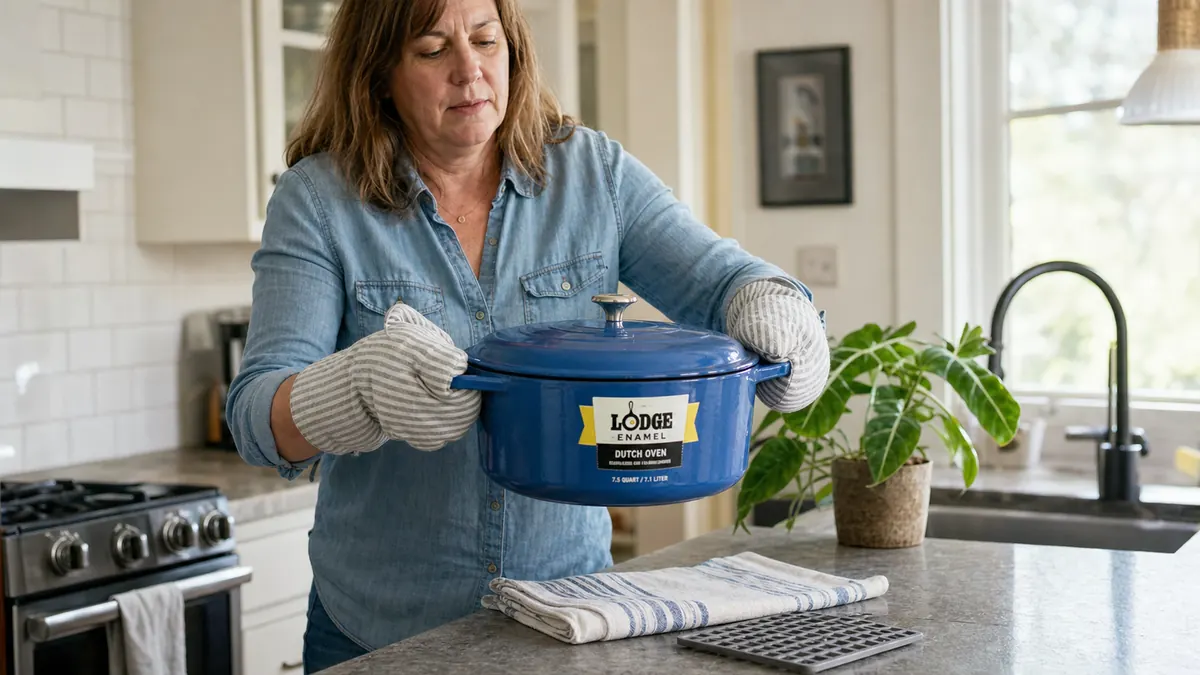
Here's the first thing that surprised me, and it happened before I'd cooked a single meal in it. When I unpacked my Lodge, I found a tiny pinhole in the enamel near the base, a spot where the glaze hadn't fully covered the cast iron underneath. It wasn't a crack and it wasn't shipping damage, it's just a known quirk of how Lodge enamels its cookware. The finish on a Lodge is never going to have the glass-smooth, poured look you get on a boutique French brand. It has a slightly pebbled, matte texture straight out of the box, almost like an orange peel, and if you're expecting the showroom finish from the listing photos, that first look can feel like a letdown.
It doesn't affect cooking. I want to be clear about that, because I spent an embarrassing amount of time searching whether a pinhole meant I'd gotten a defective unit. It didn't. I've already gone deep on how the interior enamel actually holds up to real cooking over time in my long-term Lodge review, and two years later that tiny factory pinhole hasn't grown, chipped further, or done anything except sit there as a reminder that this is a mass-produced workhorse, not a hand-finished heirloom.
Chips Show Up in Places You'd Never Guess
The title of this review isn't exaggerating. About four months in, I noticed a small chip in the enamel exactly where the lid rests against the pot rim, not from dropping anything or banging it on the faucet, just from the ordinary motion of lifting the lid, checking the braise, and setting it back down slightly off angle a hundred times over. Enamel against enamel, metal edge to metal edge, wears in a spot nobody thinks to protect. It's cosmetic, it hasn't spread, and it hasn't affected the seal or the cooking, but it was not a chip I expected, and it is not one any review mentioned before I bought mine.
If you're precious about a pristine finish, know that this kind of small edge wear is basically guaranteed with regular use, Lodge or otherwise. What matters more than avoiding it entirely is knowing it's coming, so a little chip at the rim doesn't send you into a panic about whether you ruined an expensive pot. It didn't ruin anything. It's just what an honestly used Dutch oven looks like after real months on the stove, not the staged months you see in a product photo.
It's Heavier in Your Hands Than the Spec Sheet Admits
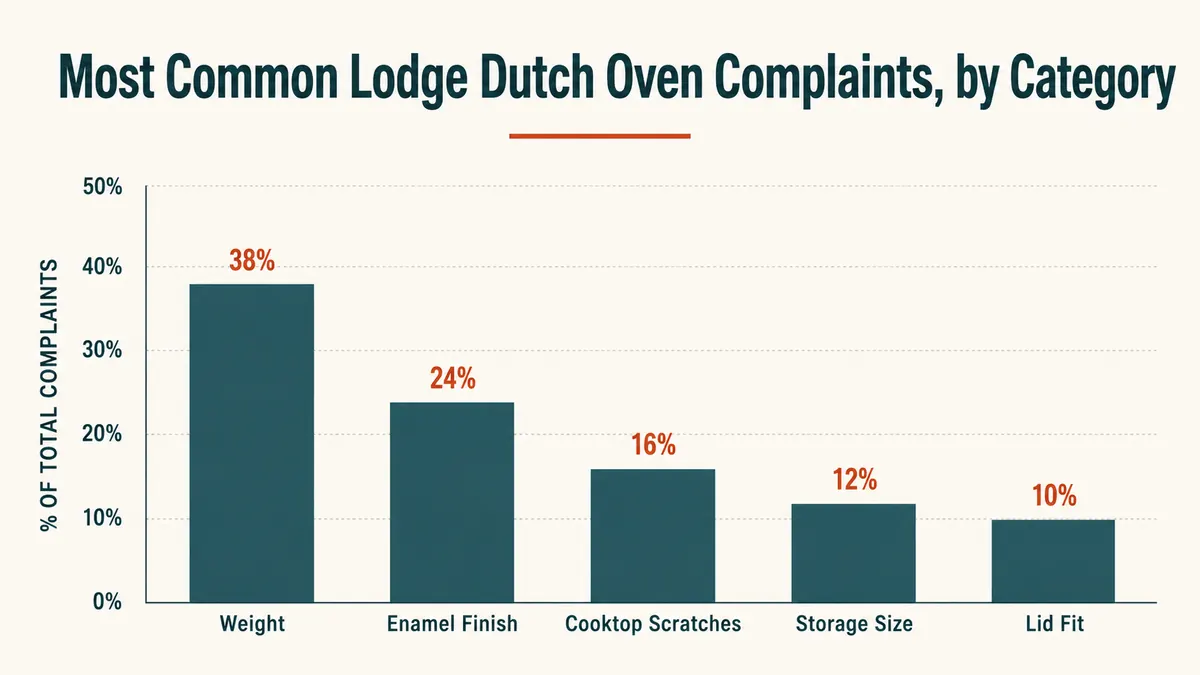
The listing tells you the pot weighs a little under 15 pounds empty. What it doesn't tell you is what that feels like once you've added a chuck roast, two cups of stock, and a pile of vegetables, then have to lift the whole thing out of a 325 degree oven with two hands, oven mitts, and zero room for error, while the lid is trying to slide off center. I nearly dropped mine getting it from the oven to the stovetop trivet during my second week of owning it, and I'm someone who lifts heavy pots for a living, more or less.
Nobody puts that moment in a five-star review. They put a photo of the finished braise. If you have a bad shoulder, a wrist that's given you trouble, or you just don't want to think that hard every time dinner comes out of the oven, that weight is worth sitting with before you buy, not after. It's not a flaw in the Lodge specifically, every enameled cast iron Dutch oven this size shares the problem, but the actual felt weight when it's full and hot deserves more attention than the empty-pot spec ever gets it.
The Glass Cooktop Problem Nobody Mentions
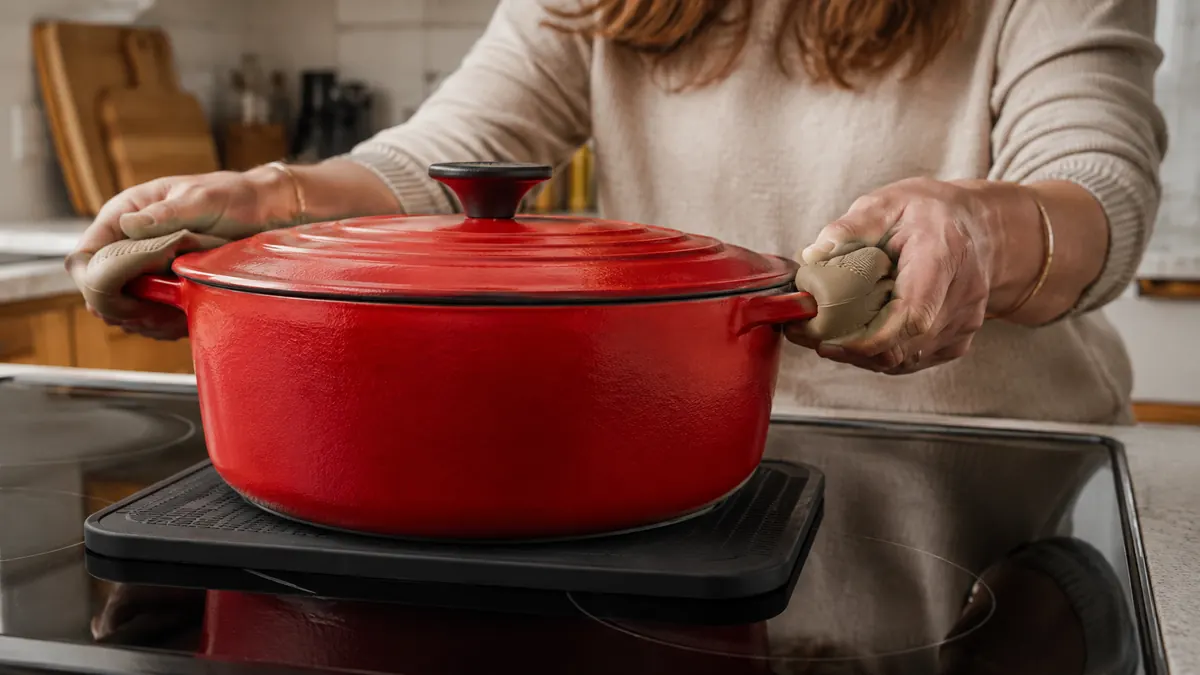
This is the one that would have actually changed my behavior if I'd known it going in. The underside of a Lodge Dutch oven has that same slightly rough, matte cast iron texture as the rest of the exterior, not a smooth polished foot. If you've got a glass or ceramic cooktop, sliding this pot even a couple of inches while it's touching the surface can leave a scratch. I found this out the hard way with a small scuff mark on my cooktop near the back burner, from nudging the pot sideways to reach for something behind it, not from anything I'd call careless.
Now I lift it, I don't slide it, every single time, and I keep a silicone trivet under it whenever it's resting on the cooktop instead of actively cooking. If you've got a glass-top range, this is genuinely worth planning around before the Lodge arrives, not something you discover with a wince the first week. It's a small habit change, but it's the kind of thing that belongs in the listing and never is.
I asked around after this happened to me, and it turns out I'm not the only Lodge owner who's dealt with it. A friend who does kitchen remodels told me she sees the same faint arc-shaped scratches on glass cooktops from cast iron cookware more often than any other single cause, Lodge included but not unique to it. If your range came with the house and you're not planning to replace it anytime soon, that's reason enough to build the lift-don't-slide habit from day one instead of learning it from a scratch you can't buff out.
Storage Space You Didn't Budget For
The other thing that caught me off guard was how much vertical clearance this pot needs once the lid is on. It's tall enough that it doesn't slide into most standard lower cabinets without either removing a shelf or storing it on its side, which I don't love doing with a full pound of cast iron balanced sideways. It also doesn't nest inside anything else I own, so it claims its own dedicated real estate whether I'm using it that week or not. If you're working with a small galley kitchen or limited lower cabinets, measure your actual space before you buy, because a Lodge is not a pot that politely shares a shelf.
I ended up just leaving mine on the stovetop permanently, which solved the storage problem but meant it's now part of the kitchen's visual furniture whether I like the way it looks that week or not. If a spotless, empty stovetop matters to you, factor that in. This pot wants to live somewhere, and tucked out of sight isn't really an option unless your cabinets are unusually generous.
Little Annoyances That Add Up
Beyond the big three, weight, cooktop risk, and storage, there's a handful of smaller things worth knowing. The lid rattles a bit when you carry the whole pot across the kitchen, loud enough that my husband asks if something's wrong every time I move it. The stainless knob on top gets hot enough during a long braise that grabbing it barehanded out of habit is a mistake you only make once, and there's no heat-safe upgrade included in the box. And the included recipe booklet, while a nice touch, is thin enough that I lost mine within a month and never bothered replacing it.
There's also a small learning curve around cleaning. The enamel exterior near the burner can pick up faint scorch marks if a pan boils over next to it, and while a baking soda paste lifts most of it, it takes more elbow grease than I expected from a pot marketed as low-maintenance. None of this is a reason to skip the Lodge. It's just the kind of detail that belongs in a real review instead of getting smoothed over by five stars and a stock photo.
What I Liked
- Genuinely solid cooking performance for the price, that part of the reputation is earned
- Wide handles make it manageable to lift even with the added weight
- Enamel interior has held up well to daily cooking, factory quirks aside
- Cheaper than the boutique brands without a real performance gap
Where It Falls Short
- Factory enamel finish is pebbled and imperfect straight out of the box, not showroom smooth
- Genuinely heavy once it's full, worth testing your grip and lifting comfort before buying
- Rough cast iron bottom can scratch a glass or ceramic cooktop if you slide it
- Takes up a dedicated storage spot, doesn't nest or tuck easily into a small kitchen
The Lodge isn't a bad pot, it's just a pot that comes with a few habits you have to learn instead of ones the listing teaches you.
Who This Is For
If you've got the cabinet space, a sturdy grip, and a stovetop that isn't glass or ceramic, the Lodge is an easy recommendation. It cooks like cookware twice its price, the factory quirks are cosmetic, and once you know to lift instead of slide and to give it a permanent home, none of this list matters day to day. For anyone replacing a pot that's already failed them, warped, cracked, or just worn out, the Lodge earns its keep fast.
It's also a good fit if you'd rather learn a few habits than pay a premium to avoid learning them. Lifting instead of sliding, giving the pot a permanent home, and expecting a little cosmetic wear over time are small asks in exchange for a Dutch oven that braises and bakes as well as this one does. For most home cooks, that trade is an easy yes.
Who Should Skip It
If you've got a glass cooktop and know you're not going to remember to lift instead of slide, or if grip strength and joint pain make a nearly 20 pound loaded pot a genuine risk rather than a minor inconvenience, I'd think harder before buying this specific size. A smaller quart size solves some of that, or it might be worth reading how the Lodge stacks up against the pricier option in my Lodge versus Le Creuset comparison before deciding whether the extra cost of a lighter, smoother competitor is or isn't worth it for your kitchen.
And if a spotless stovetop and empty countertops matter more to your kitchen's look than convenience does, remember this pot doesn't tuck away easily. Measure your cabinet clearance before you order, not after it arrives and you're standing in the kitchen trying to figure out where fifteen pounds of cast iron is supposed to live.
Still think the Lodge is right for your kitchen? Here's where I'd start.
Every pot has quirks, the Lodge included, but for the price, mine has earned its spot on the stove. Check today's price on Amazon and see the current availability for yourself.
Amazon Check Today's Price on Amazon →