
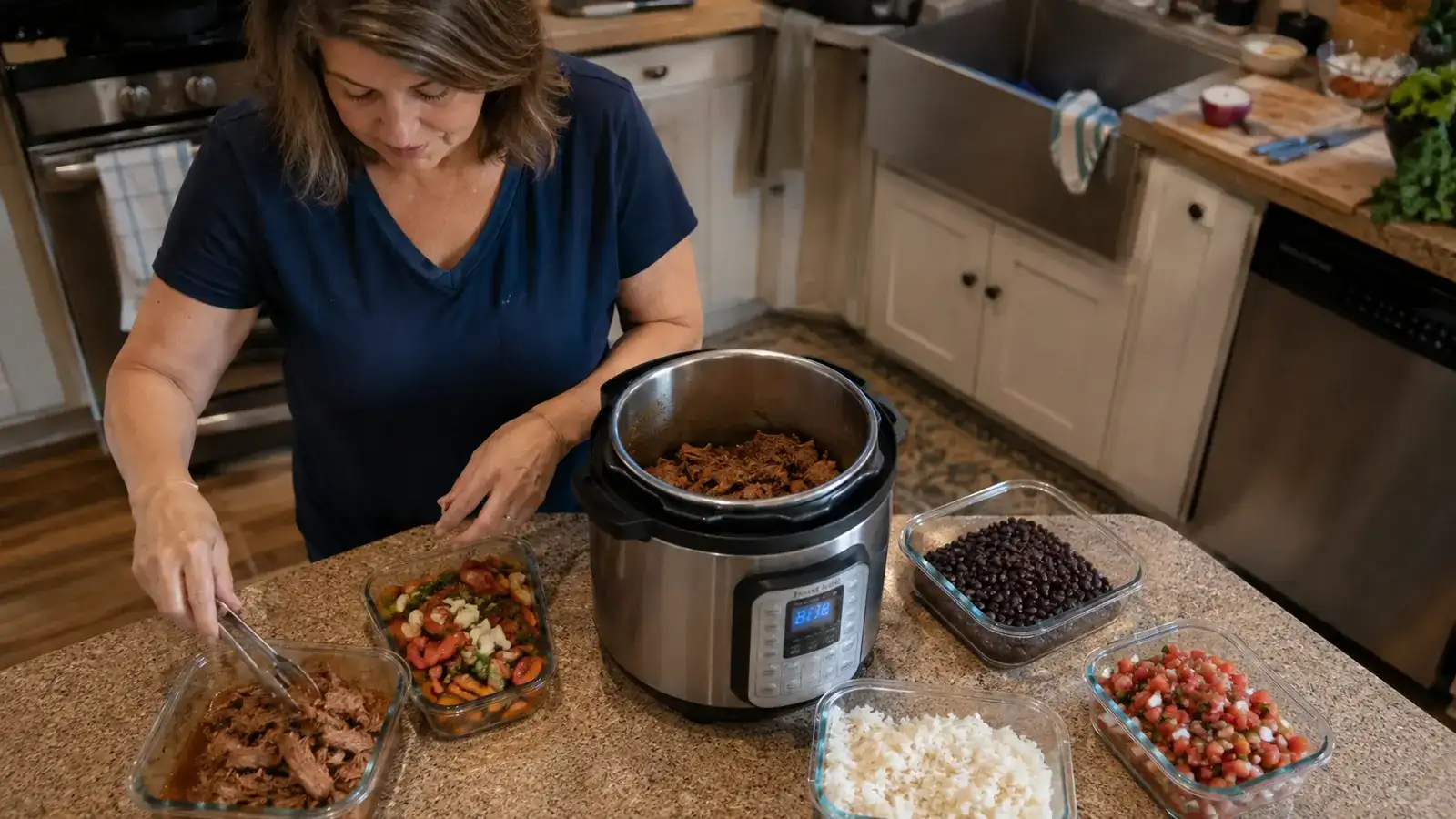
Every Sunday around two in the afternoon, my kitchen turns into a small factory. Rice goes in one batch, shredded chicken in another, a pot of black beans in a third, and I'm done in under two hours with five weeknight dinners half built before Ray even asks what's for dinner Wednesday. The whole routine runs through one appliance: my Instant Pot Duo, the 6-quart stainless one I bought back when my daughter left for college and I finally admitted cooking for two people every single night from scratch wasn't happening anymore. Four years and probably nine hundred uses later, it's still the piece of equipment I'd replace first if my kitchen burned down tonight.
The mistake I made the first two years was pressure cooking one enormous batch of one thing and calling it meal prep. A vat of chili gets old by Wednesday night no matter how good it is. The routine that actually works treats the Instant Pot Duo as a machine that runs four or five short jobs back to back, not one long job, and it's the same reason I wrote up why pressure cooking beats standing at the stove for anyone still on the fence about it.
My husband Ray works second shift three nights a week, so half the point of Sunday isn't just speed, it's making sure whoever's home first can put together a real meal without a recipe or a decision. My youngest still lives at home and grabs a container of rice and shredded chicken for lunch before soccer practice more days than not. None of that works if Sunday afternoon turns into a three hour ordeal, which is exactly what it was before this pot showed up in my kitchen.
Tired of Standing Over Four Pots at Once on a Sunday?
The Instant Pot Duo is the one appliance in my kitchen that actually earns its counter space every single week. See today's price and read what almost 175,000 other reviewers have to say before you build your own Sunday routine around it.
Amazon Check Today's Price on Amazon -> →Step 1: Build Your Sunday Stack Before You Turn Anything On
Before I press a single button, I write out the stack: which protein, which grain, which bean, in what order, on the back of an envelope stuck to the fridge with a magnet. A single 6-quart Instant Pot Duo only cooks one thing at a time, so the sequence is the whole game. I always start with whatever takes the longest under pressure and needs the longest natural release, because that's dead time I can use to chop, measure, and label containers instead of standing around waiting on the counter.
My typical stack: chicken thighs for salads and grain bowls, a pot of brown rice, a batch of black beans I never bother soaking anymore, and half a dozen eggs for grab-and-go breakfasts. That's four separate cooks, four different pressure times, and every single one is possible in the same one pot because I'm not trying to cook them together.
It sounds like overkill for a Sunday chore, but skipping this step is exactly how I used to end up defrosting a second protein at nine at night because I forgot I needed it for Thursday. Two minutes with a pen beats an hour of scrambling three days later.
Step 2: Start With the Longest-Cooking Protein First
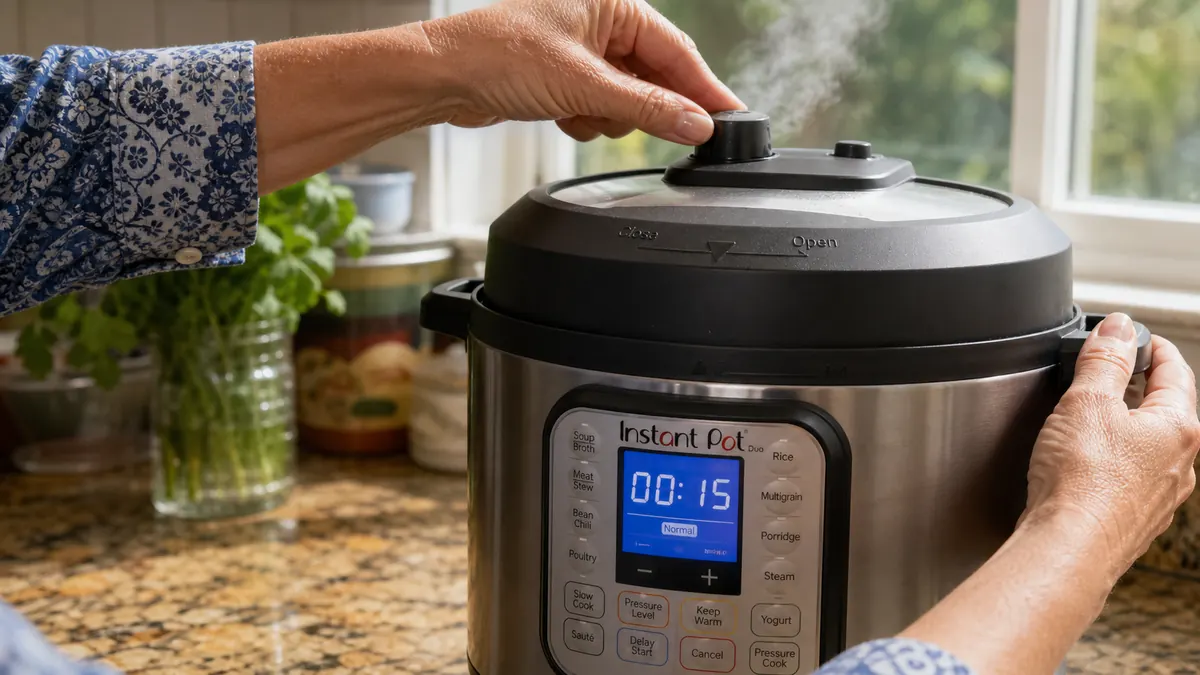
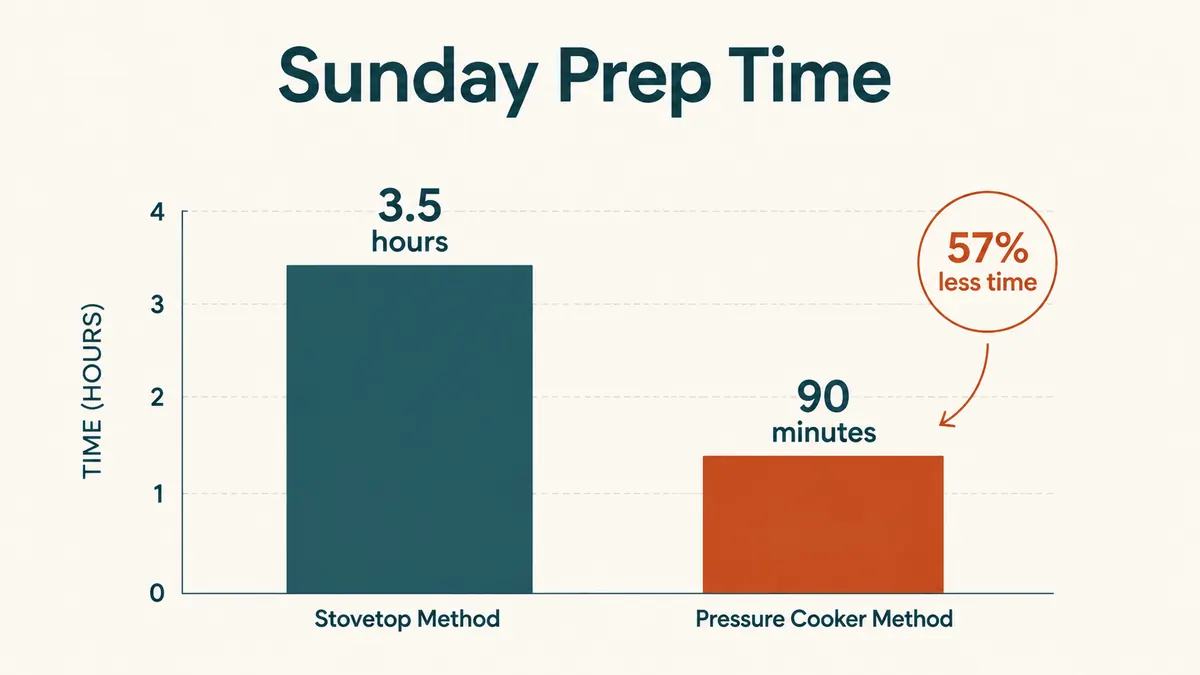
The protein always goes in first because it has the longest cook time and, more importantly, the longest natural pressure release. A three pound pork shoulder for carnitas needs sixty minutes under pressure and another fifteen to twenty minutes of natural release before I crack the valve. That's roughly ninety minutes where the Instant Pot Duo is doing the actual work and I'm free to do everything else in the kitchen.
I also brown the pork first using the pot's own saute setting, right in the same insert, before pressure cooking it. It's an extra ten minutes and one more thing to wipe out, but the crust it builds is the difference between carnitas that taste like they were braised and meat that just tastes boiled. Skipping the sear is the single most common shortcut people take with these pots, and it's the one I'd tell you not to bother taking.
That ninety minute window is when I chop three bell peppers, a bag of carrots, and whatever's about to go bad in the crisper drawer for stir fry and salad add-ins. I run the dishwasher, wipe counters, and by the time the pin drops on the lid, I've already done the prep work that used to be its own separate chore on a weeknight when I had no energy left for it.
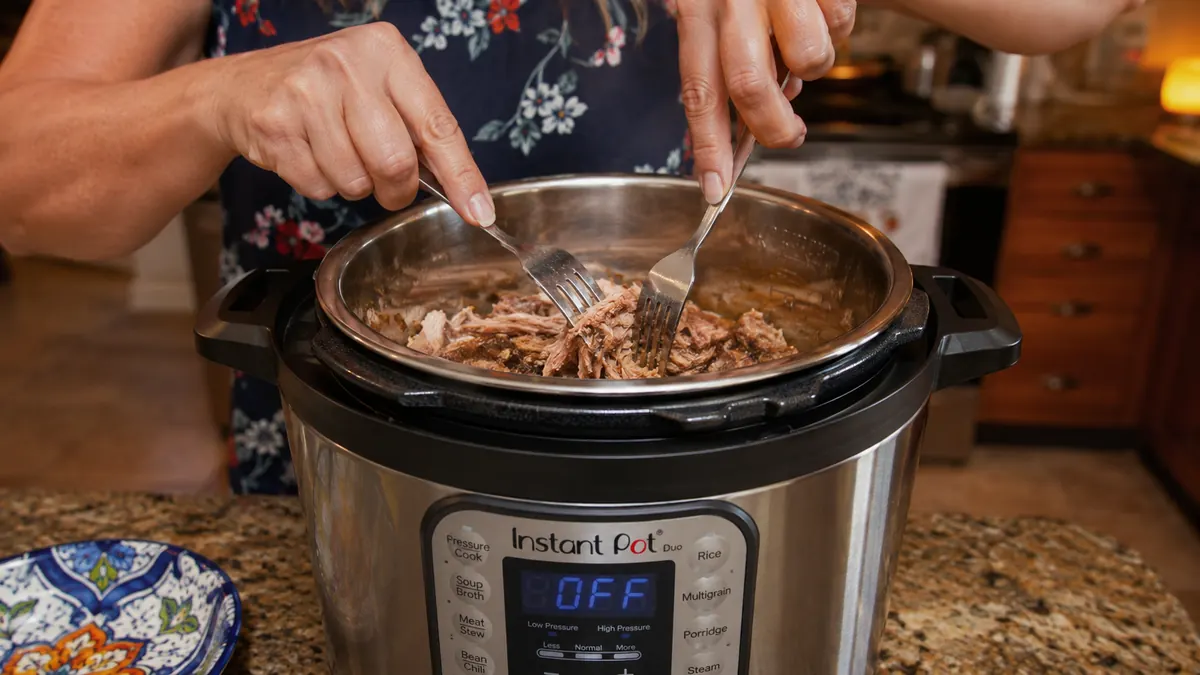
Once it's done, I shred the pork right in the pot using two forks, leave it sitting in a cup or two of its own cooking liquid, and portion it into containers once it's cooled enough to touch. Meat shredded and stored in its own juice reheats like it was made that day. Dry shredded meat reheated on its own gets sad and stringy by Thursday, and that's the difference between a lunch I look forward to and one I choke down at my desk.
Step 3: Layer the Grains and Legumes While the Pot Is Still Warm
Rice and beans go next because they're both fast and both use a quick or short natural release, so there's no big gap between them. Brown rice at a 1:1.25 ratio of rice to water takes twenty two minutes under pressure with a ten minute natural release. Black beans, no soak, take twenty five minutes with a full natural release, which usually lands around fifteen more minutes once the cooker de-pressurizes on its own.
I don't deep clean the inner pot between these two cooks, just a quick rinse and a wipe, because rice picks up almost nothing from the beans that came before it and I'm not running a five star kitchen here. What I do rinse well is the sealing ring, since that little rubber gasket holds onto smells faster than anything else on the unit, and a bean-smelling rice pot is a mistake I've made exactly once.
Some weeks I add a five minute batch of hard boiled eggs at the very end, since by then the pot barely needs to build pressure from residual heat and the whole extra step costs about twelve minutes start to finish. It's not required, but a dozen eggs peeled and in the fridge Sunday night means breakfast is solved too, and solving three meals instead of one out of the same appliance is really the whole reason I bother with any of this.
Step 4: Portion Immediately, Don't Let It Sit on the Counter
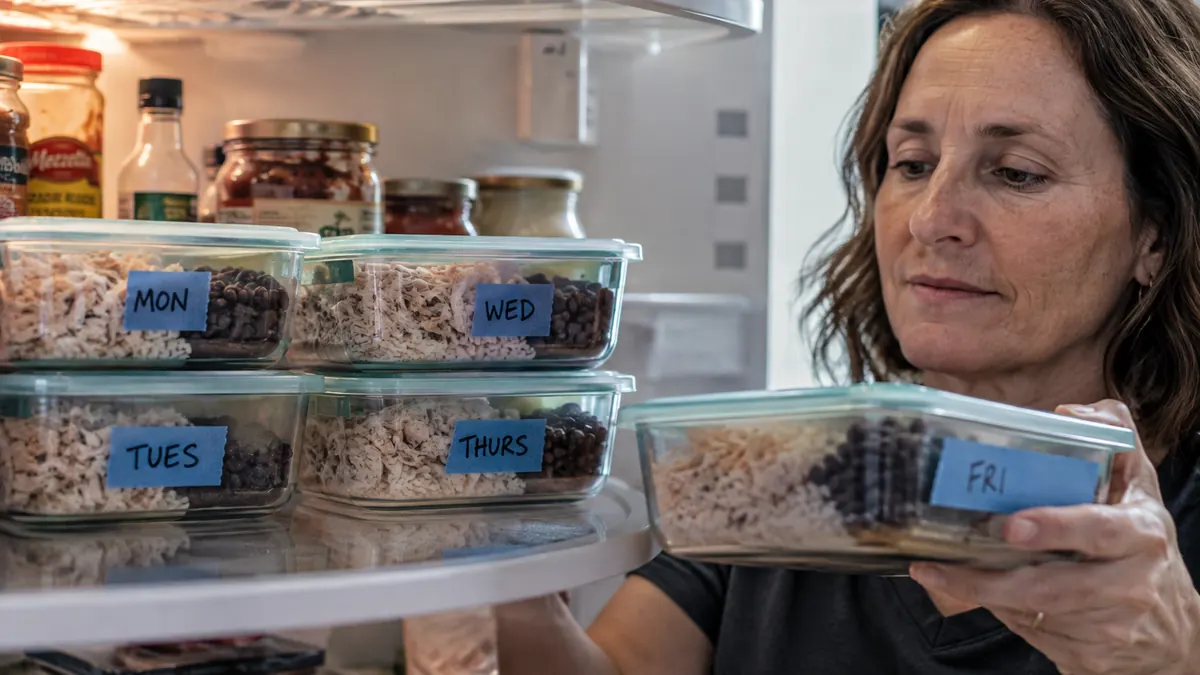
Everything gets portioned the same afternoon it's cooked, not the next morning when I'm rushed and everything looks the same in the fridge. I use shallow containers instead of deep ones because food in a shallow container cools to a safe temperature much faster than the same amount piled into a tall deli tub, and that matters more than people think when you're batch cooking meat for a whole week.
I label every container with painter's tape and a Sharpie, day of the week only, nothing fancy. Two of the five chicken portions usually go straight into the freezer instead of the fridge, because by Thursday I know from experience that nobody in this house wants the same lunch four days running no matter how good it tasted on Monday. If you want the fuller rundown of what has held up and what hasn't after four years of near daily use, I put it all in my honest review of the Instant Pot Duo.
I also keep sauces and rice separate in their own small containers rather than pouring everything together, because rice that sits in sauce all week turns to mush by Wednesday and nobody wants that for dinner, let alone lunch at a desk. It's an extra container to wash, but a bowl of grain and beans that still tastes like itself on day four is worth the extra thirty seconds at the sink.
Step 5: Reset the Pot for Tuesday While You're Already Standing There
The last step happens while I still have the sink full of suds from the containers: I wash the inner pot, dry the sealing ring, and prop the lid upside down on the base instead of sealing it shut. A pressure cooker left closed on the counter starts to smell like whatever you last cooked, and propping the lid open for a few hours fixes that for free.
Before I put everything away, I also bag up one more meal's worth of raw ingredients, usually a soup or chili, and tuck it in the freezer with the day written on it. On the night I actually need it, that bag goes straight into the pot with a splash of broth and I'm eating in under thirty minutes, no cutting board required on a Tuesday when I've already used up my patience for the day.
None of this works if the reset step gets skipped. The two Sundays I was too tired to wash and prop the lid, I paid for it Tuesday with a pot that smelled like last week's curry and a scramble to figure out dinner from scratch. The Instant Pot Duo is reliable enough that the routine only breaks when I break it, not the other way around.
What Else Helps
A second stainless steel inner pot is the one accessory I'd actually call worth it if you're doing this every week, since it means you're not scrubbing between the protein and the rice on a night you're in a hurry. Past that, skip the extra gadgets. I bought a glass lid for slow cooking leftovers and used it maybe four times in four years. Good silicone mitts and a set of shallow containers do more for this routine than any accessory Amazon will try to sell you alongside the pot.
People ask me about the air fryer lid attachment a lot, and honestly, I don't own one and don't feel like I'm missing anything for meal prep specifically. It's a fine gadget for finishing things crispy, but nothing in this Sunday routine needs it. Spend the money on a second inner pot or a decent set of shallow containers before you spend it on an attachment that solves a problem this routine doesn't have.
Save the bone-in scraps and vegetable ends from the whole afternoon in a gallon bag in the freezer instead of tossing them. Once that bag is full, a forty five minute pressure cooker session turns it into a rich stock, which is one more thing off my plate for the following Sunday and something I'd otherwise never get around to making from scratch.
The routine works because the pot does one job at a time, really well, while I handle everything else.
Get Your Sundays Back This Week
If ninety minutes instead of three hours sounds like something your house could use, the Instant Pot Duo is the pot my whole routine is built around. Check today's price before you plan next week's meals.
Amazon Check Today's Price on Amazon -> →